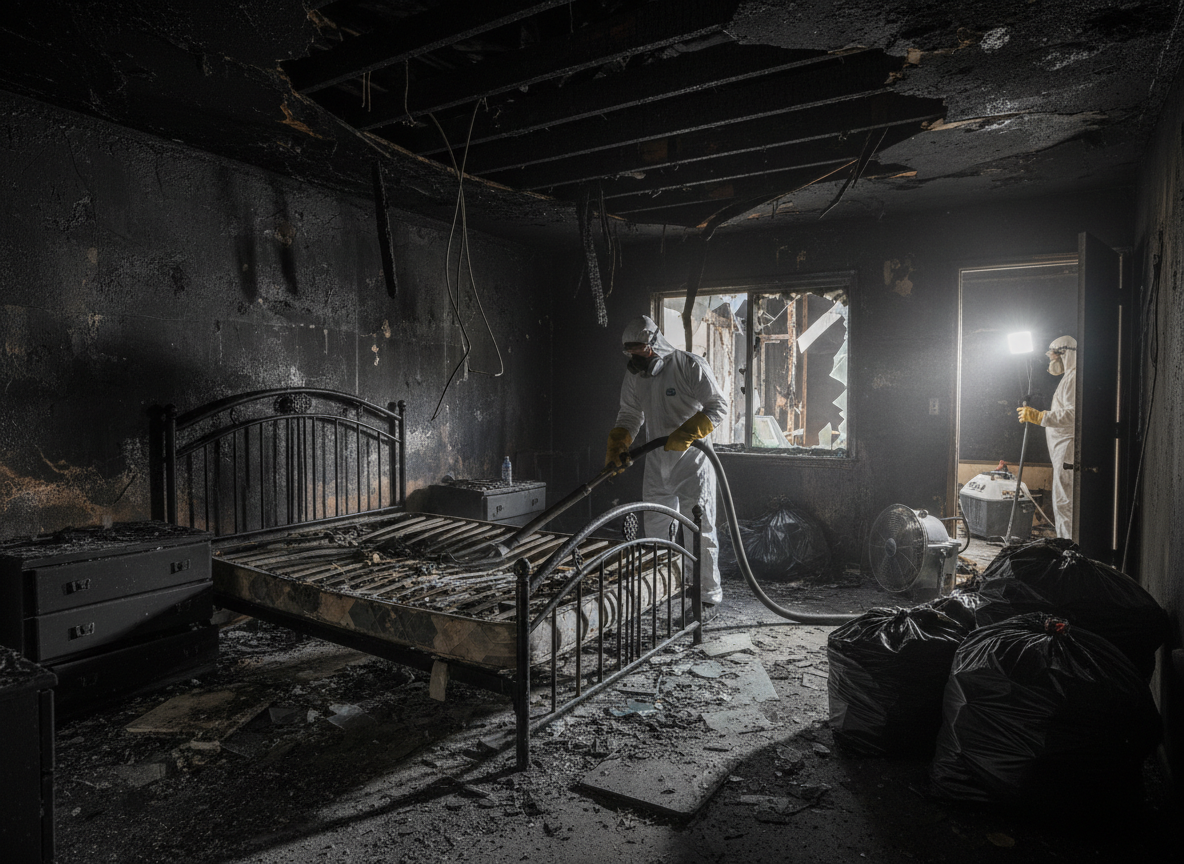
Bedroom fires in Chatsworth often start from electrical faults in older single-family homes built before the 1980s, common in West Chatsworth and near Chatsworth Park South. Dry Mediterranean summers with low humidity allow soot to penetrate deeper into carpet pads, mattress fibers and drywall cavities than in coastal zones. Restoration crews must remove and dispose of contaminated insulation while protecting adjacent rooms from cross-contamination, especially when homes sit close together on narrow streets near Orcutt Ranch.
Mild winters keep humidity moderate, slowing corrosion on metal bed frames and electrical boxes but allowing mold to form if water from suppression efforts sits in subfloors. Technicians test for hidden char behind baseboards and in closet walls, then use negative air machines to capture fine particles before HEPA vacuuming. Los Angeles County building codes require permits for any structural wall repair after fire, so crews document every layer removed to keep the job moving without delays from inspectors.
Smoke from synthetic bedding and furniture leaves oily residues that etch wood furniture and discolor window treatments faster in the area's hot afternoons. Crews isolate the bedroom with plastic barriers sealed at the ceiling, then clean or replace HVAC filters to stop odors from traveling through ducts shared with neighboring rooms in multi-unit buildings near Downtown Chatsworth. Final clearance testing checks for VOC levels before homeowners re-enter.
Technician insight
In Chatsworth, the thing that catches most people out with Bedroom fire damage cleanup is how quickly soot from a bedroom fire migrates into the HVAC ducts of single-story ranch homes built in the 1960s near Santa Susana Pass; the dry summer air lets fine particles travel through shared returns and settle in living rooms before homeowners notice.
Electrical fire in West Chatsworth bedroom
A nightstand lamp shorted in a 1970s ranch home near Chatsworth Park, charring the wall and filling the room with plastic smoke. We found soot had traveled through the return vent into the hallway. Containment barriers went up immediately, followed by HEPA scrubbing and removal of the affected drywall section. The bedroom passed clearance testing within four days and the family moved back in without odor complaints.
How it works
- 1
Initial Assessment
Technicians inspect the bedroom for structural compromise, soot depth and water intrusion from suppression, noting any damage to flooring or walls common in Chatsworth's older stock.
- 2
Containment and Safety Setup
Plastic barriers and negative air machines isolate the space to prevent soot migration into hallways or adjacent bedrooms.
- 3
Soot and Debris Removal
Contents are inventoried, surfaces are HEPA vacuumed, and charred materials are removed while protecting salvageable items.
- 4
Cleaning and Odor Treatment
Specialized agents clean hard surfaces and thermal fogging neutralizes smoke odors trapped in porous materials.
- 5
Final Verification
Air quality and surface tests confirm the bedroom meets habitability standards before reconstruction begins.
Pricing
Pricing varies with the extent of soot penetration, number of affected surfaces and whether structural repairs are required after inspection.