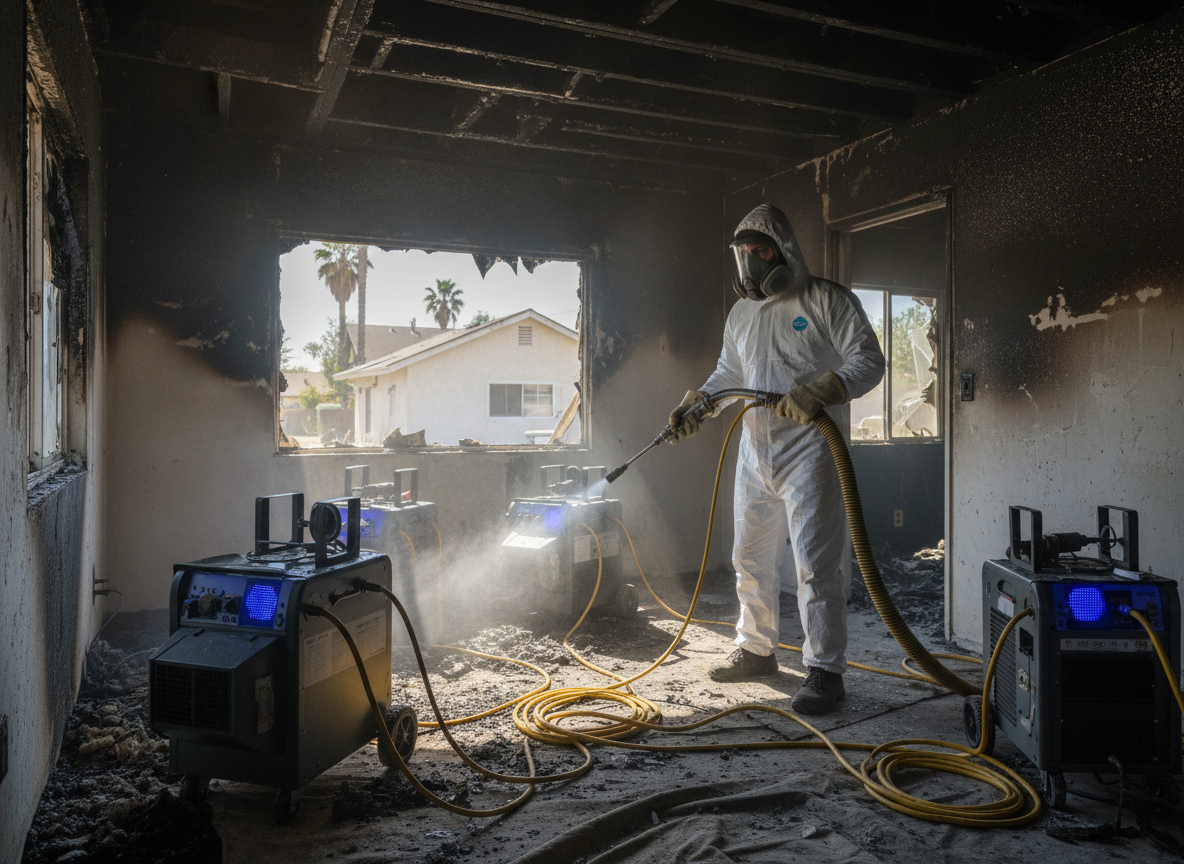
In Chatsworth homes built from the 1950s through 1970s, smoke from even small fires travels deep into lath-and-plaster walls and attic insulation because of the dry Mediterranean summers that pull air upward through unsealed cavities. Standard air fresheners fail here because the odor molecules bond to porous wood framing and HVAC ductwork that runs through many single-story ranch houses near Orcutt Ranch. Proper removal requires thermal fogging combined with hydroxyl generators to break down residues without leaving moisture that could later cause mold in mild winters.
Edge cases appear often when fires start in kitchens and travel through shared walls in West Chatsworth neighborhoods close to Northridge. Soot can settle inside electrical boxes and behind baseboards, creating lingering smells that surface weeks later when temperatures rise. Technicians must pull outlets and treat cavities individually while following Los Angeles County air-quality rules that limit certain chemical neutralizers near Santa Susana Pass State Historic Park trails.
Homeowners in Canoga Park and Simi Valley sometimes discover that carpet padding and subflooring in older homes absorb smoke more than newer builds, requiring selective removal rather than full replacement. Skipping these hidden areas leaves odors that return every time the heating system cycles during cooler months. Detailed inspection of every porous surface prevents repeat calls and keeps restoration work contained to the affected zones.
Technician insight
In Chatsworth, the thing that catches most people out with Odor removal after fire is how smoke travels into the attics of 1960s ranch homes near Chatsworth Park South during our hot dry summers, then settles back into living spaces once the heating kicks on in winter. Homeowners often clean only visible surfaces and miss the insulation and ductwork.
Kitchen Fire Odor Lingering in West Chatsworth
A kitchen fire left smoke throughout a single-story home. Inspection showed residues inside HVAC ducts and attic insulation. Crew removed affected materials, applied targeted neutralization, and verified clearance. Odors did not return after system reactivation.
How it works
- 1
Initial Assessment
Inspect all affected rooms, HVAC runs, and attic spaces to map where smoke has traveled through the structure.
- 2
Source Removal
Remove or clean porous materials such as insulation, carpet padding, and drywall sections that hold odor.
- 3
Odor Neutralization
Apply thermal fogging and hydroxyl treatment to break down remaining smoke particles in cavities and ducts.
- 4
Final Verification
Test air quality and surfaces with odor meters to confirm no traces remain before returning the home to use.
Pricing
Pricing varies by affected square footage and materials; upfront quotes provided after inspection.