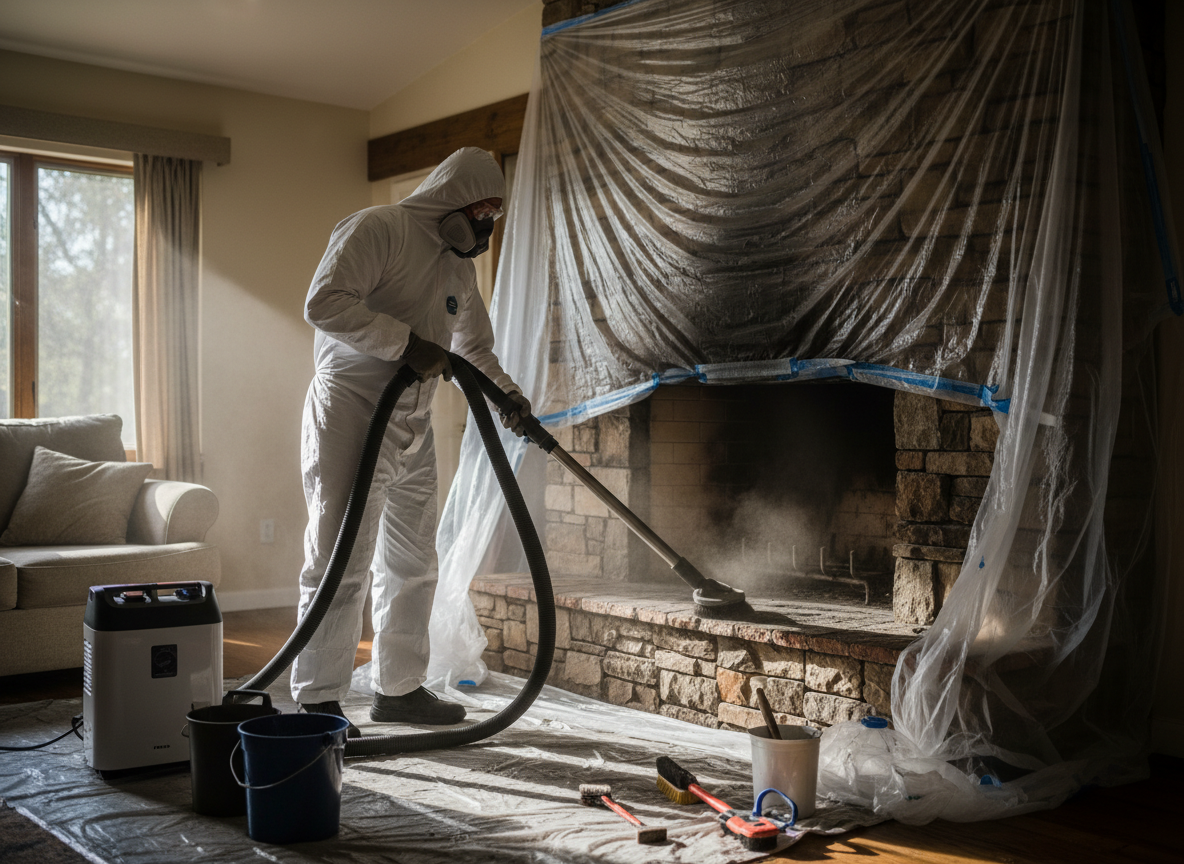
Soot from structure fires in Chatsworth often bonds tightly to surfaces due to the Mediterranean climate's hot dry summers that bake residues into materials like stucco and older wood framing common in West Chatsworth and near Chatsworth Park South. Technicians must distinguish between dry soot from fast-burning fires and oily soot from slower ones involving synthetics, as each requires different neutralizers and vacuum methods to avoid driving particles deeper into porous drywall or insulation found in homes built before the 1980s.
In neighborhoods like Downtown Chatsworth, smoke can travel through shared walls and attic spaces, especially when Santa Ana winds push embers from nearby Santa Susana Pass State Historic Park. Containment barriers and negative air machines become essential to prevent cross-contamination into unaffected rooms, while Los Angeles County air quality rules limit certain solvent use during cleanup to protect residents and nearby areas such as Northridge and Canoga Park.
Edge cases include soot lodged in HVAC systems serving multi-story homes near Orcutt Ranch where ductwork runs through crawl spaces with limited access. Technicians test surfaces with pH strips before applying cleaners because alkaline residues from certain building materials can react with acidic soot and create permanent staining on tile or concrete floors typical in the region.
Technician insight
In Chatsworth, the thing that catches most people out with soot removal is how the dry summer air bakes oily soot into the textured stucco common on 1960s homes in West Chatsworth, making simple wiping ineffective and requiring multiple passes with different agents.
Soot Migration in a Chatsworth Park Home
Smoke from a kitchen fire traveled through ceiling cavities into bedrooms. Inspection revealed oily residue on textured ceilings and inside HVAC returns. Crews contained the area, performed staged vacuuming and chemical cleaning, then cleared the system before the family returned.
How it works
- 1
Initial Assessment
Inspect affected rooms in the Chatsworth property to map soot migration patterns and identify material types.
- 2
Containment Setup
Seal doorways and vents with plastic sheeting and tape to isolate the work zone from the rest of the home.
- 3
Dry Removal
Use HEPA vacuums and sponges to lift loose particles without spreading them into the air or onto clean surfaces.
- 4
Chemical Cleaning
Apply appropriate neutralizers to walls, ceilings, and fixtures based on soot type and surface condition.
- 5
Final Verification
Test air quality and surfaces before releasing the space back to the homeowner.
Pricing
Pricing determined after inspection; factors include square footage, soot type, and access challenges in older Chatsworth homes.