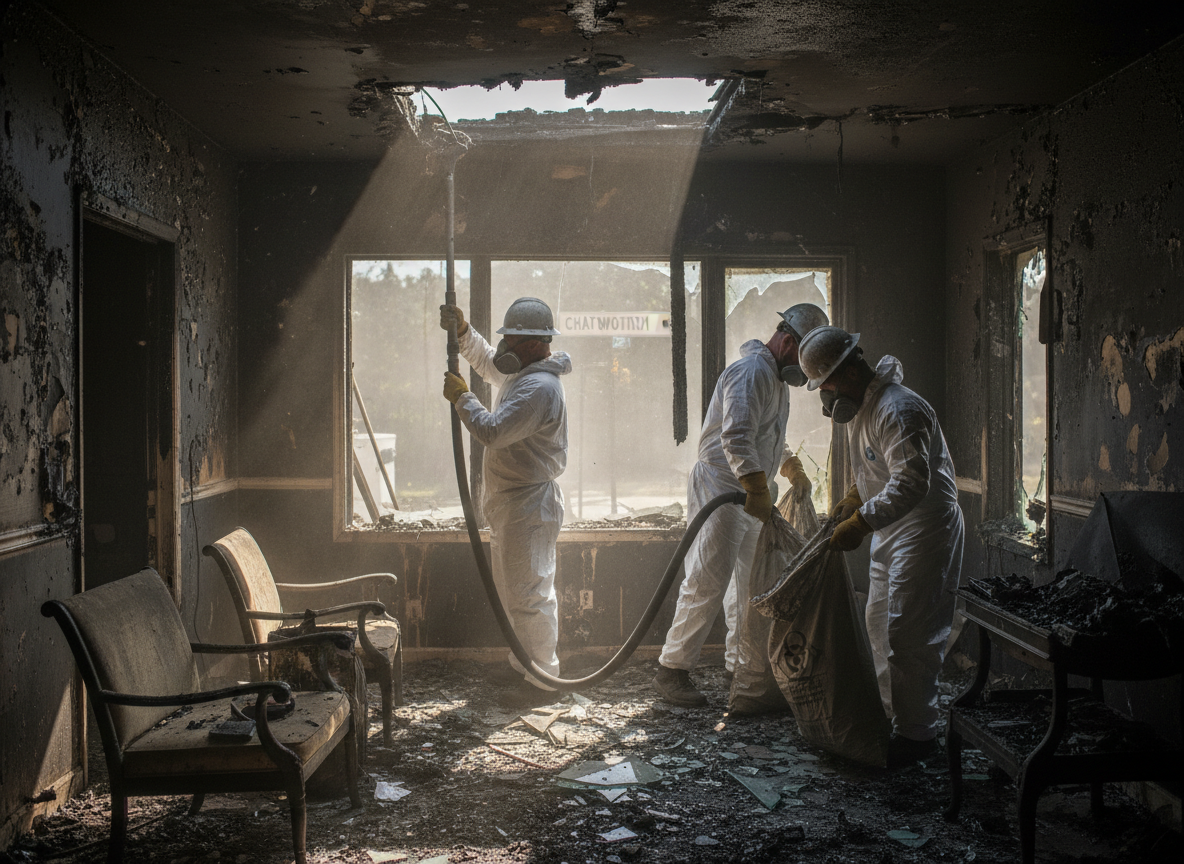
Chatsworth’s Mediterranean climate brings hot dry summers that turn even small fires into widespread soot problems. Ash travels easily through the Santa Susana Pass winds and settles into stucco exteriors, attic insulation, and the older wood framing found in many West Chatsworth and Downtown Chatsworth homes built before the 1970s. Without targeted cleaning, this residue re-circulates through HVAC systems and creates ongoing odor issues long after the flames are out.
Los Angeles County building codes require proper containment and disposal of fire-damaged materials, especially in neighborhoods bordering Santa Susana Pass State Historic Park or Orcutt Ranch where terrain can limit equipment access. Technicians must navigate narrow driveways and hillside lots common near Chatsworth Park South while preventing cross-contamination to nearby Northridge and Canoga Park properties. Hidden damage in ductwork and underfloor spaces often appears only after initial surface cleaning is complete.
Mild winters allow restoration work to continue year-round, yet the same dry conditions that fuel summer fires also make porous materials like drywall and carpet padding absorb odors quickly. Crews working from the 21701 Devonshire St location respond at any hour to limit secondary damage from water used during firefighting or from monsoon-style rains that occasionally hit the area. Thorough documentation of each step protects homeowners when dealing with insurance adjusters familiar with regional fire patterns.
Technician insight
In Chatsworth, the thing that catches most people out with fire damage clean up is how the dry summer winds push fine ash deep into the unsealed stucco and attic spaces of 1960s homes near Chatsworth Park South and the Santa Susana Pass, where standard surface cleaning leaves odors that return every time the heat kicks on.
West Chatsworth attic fire
A kitchen fire in a 1968 single-story home near West Chatsworth sent smoke into the attic insulation. Crews found ash had filtered through ceiling vents and settled on older fiberglass batts. They contained the space, removed contaminated insulation, cleaned all duct runs, and treated the remaining framing before reinstalling new insulation to restore air quality.
How it works
- 1
Initial Assessment
Technicians inspect all affected rooms, attics, and crawl spaces in Chatsworth homes to map soot penetration and identify materials that must be removed versus cleaned.
- 2
Containment and Safety Setup
Plastic barriers and negative air machines isolate work zones, protecting unaffected areas in older West Chatsworth properties where shared walls increase cross-contamination risk.
- 3
Soot and Ash Removal
Specialized vacuums and cleaning agents lift residue from surfaces, ducts, and insulation while following Los Angeles County disposal rules for fire debris.
- 4
Odor Neutralization and Final Inspection
Thermal fogging and air scrubbers eliminate lingering smoke smells before a walkthrough confirms the property meets restoration standards.
Pricing
Cost depends on square footage affected, soot depth, and whether contents cleaning is required; upfront quotes provided after inspection.