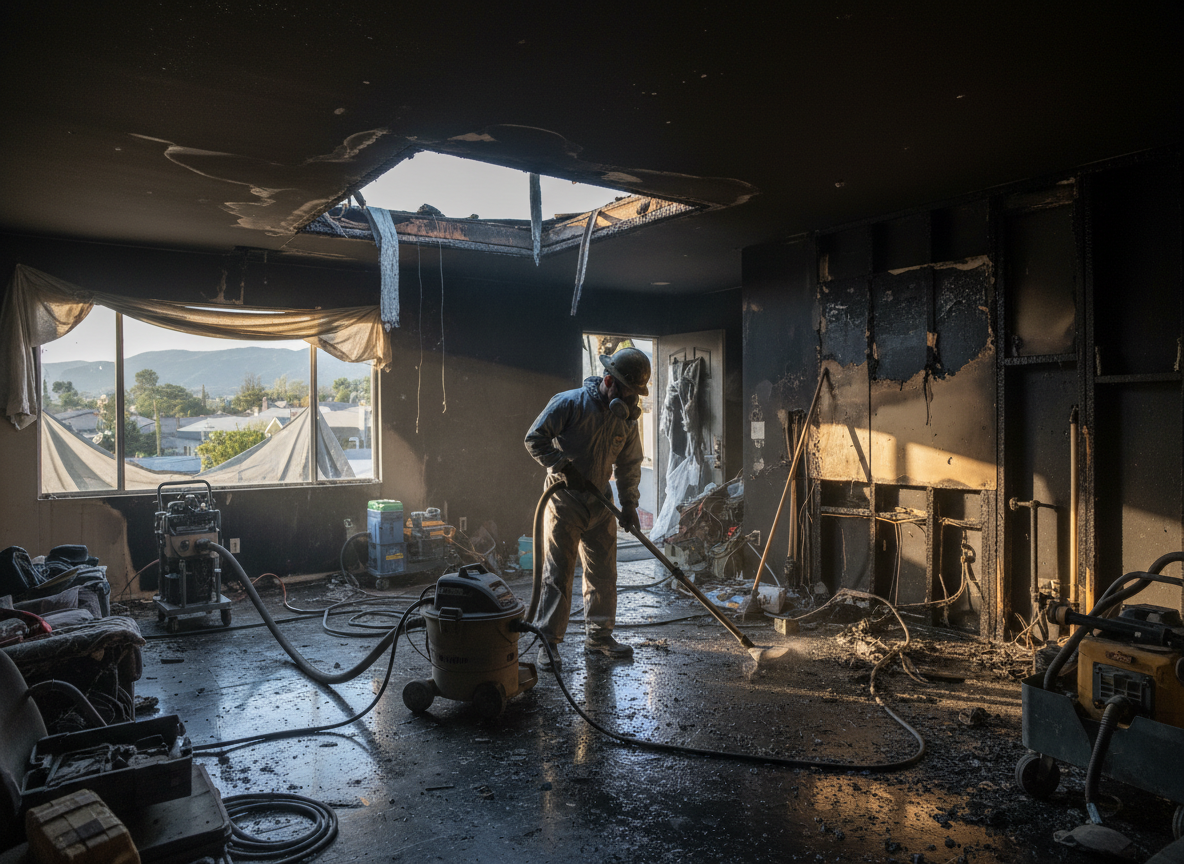
Chatsworth’s Mediterranean climate brings hot dry summers that let embers travel far across the Santa Susana Pass and into neighborhoods like West Chatsworth and Chatsworth Park. When a structure fire occurs, the first hours determine whether smoke residue sets permanently into the stucco and older plaster walls common in 1950s–1970s homes here. Emergency crews must seal HVAC returns quickly because the same dry air that fueled the fire also moves soot through ducts and into adjacent rooms.
Los Angeles County building codes require that any post-fire electrical or structural work meet current seismic standards, so technicians inspect attic spaces and balloon-framed walls before beginning cleaning. Soot from synthetic materials bonds differently to the textured ceilings found in Orcutt Ranch-area homes than it does to drywall, requiring pH-specific sponges and HEPA air scrubbers rather than standard wet cleaning. Delaying response even one day in summer heat can drive odors deeper into insulation and subfloors.
Water used by firefighters often pools against the shallow clay soils near Chatsworth Park South, creating hidden moisture behind baseboards that later supports mold. Emergency teams therefore map moisture with meters before removal begins and stage dehumidifiers rated for the region’s low humidity to pull residual water without warping original hardwood floors. Every job starts with a walk-through that notes which rooms share the same HVAC zone so negative pressure can be maintained without affecting neighboring properties.
Technician insight
In Chatsworth the thing that catches most people out with Emergency fire damage restoration is how the dry summer winds push smoke under the eaves of 1960s stucco homes near Chatsworth Park South, so what looks like a kitchen-only loss often requires full attic and duct cleaning before any paint goes on.
Garage fire affecting attached living space
A homeowner in West Chatsworth called after a vehicle fire spread into the attached garage. Crews found heavy smoke residue had traveled through the shared wall into the living room and HVAC system. Negative pressure was established immediately, followed by dry-soot removal and targeted duct cleaning. The family returned within four days once air-quality readings cleared.
How it works
- 1
Secure And Assess
Arrive within the hour, verify utilities are safe, and document visible damage room by room while noting shared walls with adjacent homes in dense Chatsworth blocks.
- 2
Contain Smoke And Soot
Set up containment barriers and negative-air machines to stop smoke from migrating into unaffected areas, especially important in single-story ranch homes common around Devonshire Street.
- 3
Remove Debris And Residue
Clear charred materials, then clean surfaces with dry and wet methods matched to the soot type before any reconstruction begins.
- 4
Restore And Verify
Replace damaged sections, run final air-quality checks, and confirm the home meets Los Angeles County habitability standards before turnover.
Pricing
Upfront written quotes after on-site inspection; final cost depends on square footage affected, soot type, and whether HVAC cleaning is required.