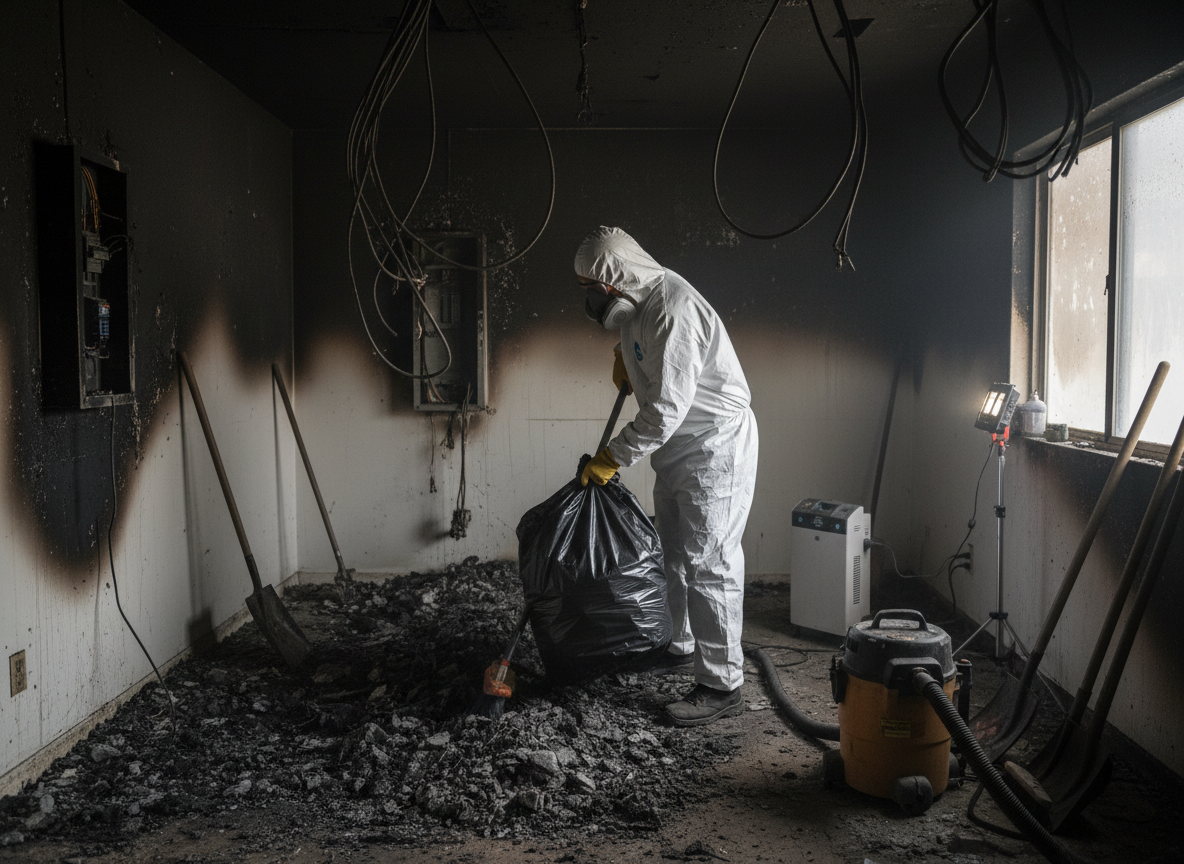
Electrical fires in Chatsworth often start in older single-family homes built before 1970 that still carry original knob-and-tube or aluminum wiring. Hot dry summers combined with the Mediterranean climate dry out insulation and increase resistance at connections, so soot travels through HVAC ducts into attics and wall cavities faster than in coastal neighborhoods. Technicians must pull baseboards and open chaseways around Santa Susana Pass terrain homes where hillside settling cracks conduit and lets smoke migrate into unexpected rooms.
Cleanup requires HEPA vacuuming of charred Romex and removal of carbon residue from outlets before any drywall repair. In Los Angeles County, any work near the service panel triggers current code checks for AFCI breakers, so crews document pre-existing conditions to avoid disputes with insurance adjusters. Properties near Orcutt Ranch or Chatsworth Park South frequently have stucco exteriors that trap acidic smoke, requiring neutralization rinses that would damage newer vinyl siding found in Northridge or Canoga Park developments.
Edge cases include buried junction boxes in 1950s ranch homes around West Chatsworth where mice have chewed wiring, turning a small outlet fire into widespread attic contamination. Mild winters keep humidity low, so residual odors linger unless thermal fogging and ozone treatments reach every stud bay. Crews always test for PCBs in pre-1979 fluorescent fixtures before disposal because Chatsworth homes near the historic park often retain original lighting from that era.
Technician insight
In Chatsworth the thing that catches most people out with electrical fire cleanup is how quickly smoke gets behind the original plaster in pre-1960 homes near Chatsworth Park South. The dry summer air keeps soot airborne longer so it travels through every stud bay and into the hillside crawlspaces that many West Chatsworth properties have. Homeowners usually try wiping surfaces themselves and just push the acidic residue deeper into the wood.
Outlet Fire Behind Kitchen Range
A 1962 ranch in Downtown Chatsworth had an outlet arc behind the range that filled the kitchen and adjacent hallway with smoke. We found the fire had traveled up the wall into the attic through a loose conduit fitting caused by decades of hillside movement. After isolating the circuit, removing the damaged wiring run, and cleaning all cavities we restored airflow without replacing the entire kitchen.
How it works
- 1
Safety Shutdown and Assessment
Isolate power at the main panel, test circuits, and map smoke migration paths through the specific home layout.
- 2
Soot and Residue Removal
HEPA vacuum all surfaces, wipe with pH-neutral cleaners, and extract from ducts and wall cavities.
- 3
Wiring Inspection and Documentation
Open affected areas, photograph damaged conductors, and note any code violations for the insurance file.
- 4
Odor Neutralization and Final Clearance
Apply thermal fogging or ozone, then run air scrubbers until no smoke smell remains.
Pricing
Cost depends on square footage affected, number of rooms opened, and whether HVAC or attic access is required; upfront written quotes provided before work begins.