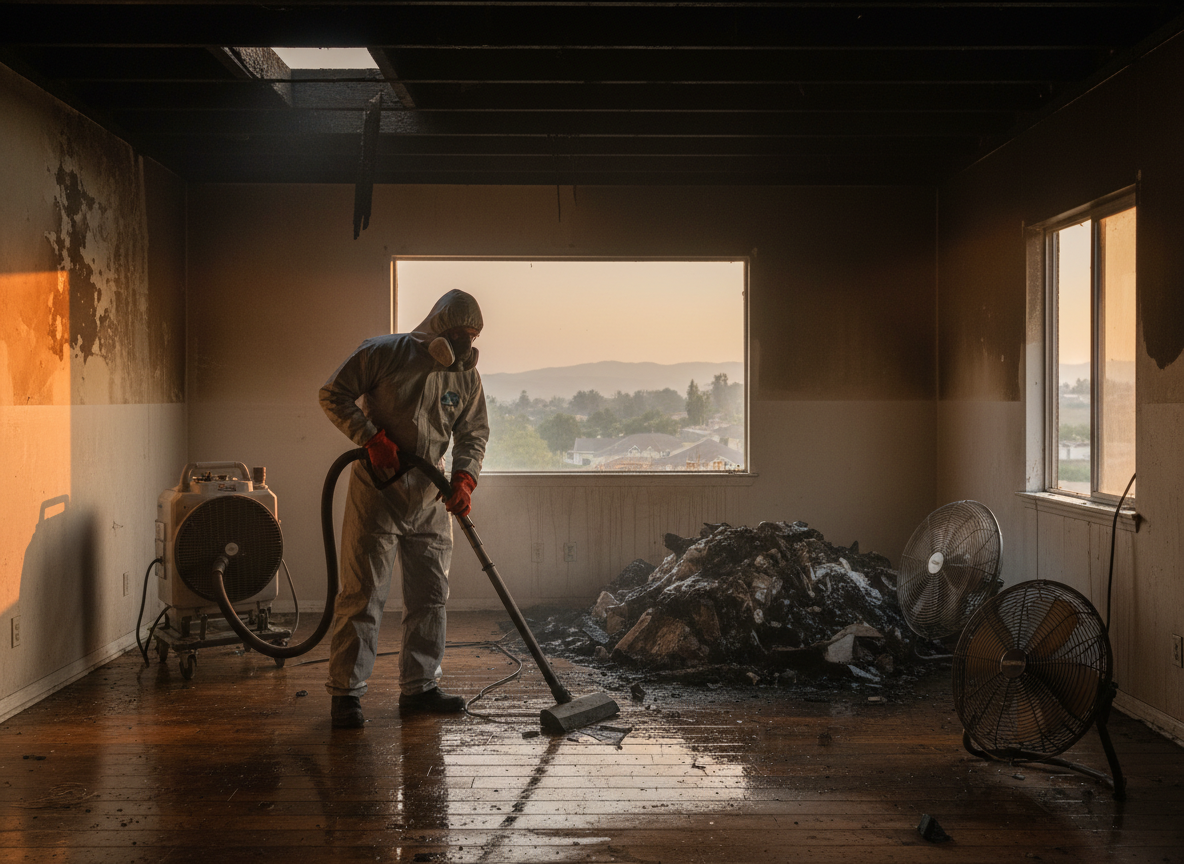
Chatsworth sits in a Mediterranean climate where hot dry summers drive wildfire risk and increase the chance that fire suppression water will later create hidden moisture problems. Older single-family homes in West Chatsworth and around Orcutt Ranch often feature stucco over wood lath and original electrical systems that trap soot and water inside wall cavities. When winter rains arrive, that combination turns alkaline soot into a corrosive film that attacks copper wiring and drywall fasteners if left untreated.
Properties near Santa Susana Pass State Historic Park and Chatsworth Park South sit on sloped terrain with clay-heavy soils that slow drainage after heavy suppression efforts. Water from hoses can migrate under slab foundations or into crawl spaces common in 1960s-1970s tract homes, creating conditions for hidden mold within days even when outdoor temperatures remain mild. Restoration crews must pull baseboards and use moisture meters on multiple wall planes rather than relying on surface readings alone.
Los Angeles County building codes require removal of all charred or water-saturated insulation before re-occupancy, and many Chatsworth homes still contain original knob-and-tube wiring that must be de-energized during drying. Technicians coordinate with local inspectors to document affected materials so homeowners avoid repeated visits from the fire department or insurance adjusters.
Nearby Northridge, Canoga Park, and Simi Valley share the same dry-summer pattern, so equipment and crews based at 21701 Devonshire St can reach jobs quickly before secondary damage sets in. The work focuses on source removal, HEPA air scrubbing, and targeted drying rather than blanket ozone treatments that older Chatsworth residents often request but that fail to address embedded soot in porous surfaces.
Technician insight
In Chatsworth, the thing that catches most people out with Fire and flood restoration is how clay soils around Chatsworth Park South hold suppression water under slabs long after the surface feels dry, especially in 1960s homes where original underlayment wicks moisture into hardwood.
Kitchen Fire with Hidden Slab Moisture in West Chatsworth
A kitchen fire in a West Chatsworth home sent water under the slab during suppression. We mapped elevated moisture readings extending ten feet into the adjacent hallway, removed saturated underlayment, and ran drying equipment for six days until readings matched unaffected areas, preventing mold before the mild winter rains arrived.
How it works
- 1
Site Assessment and Safety
Technicians arrive within hours, document visible char and water migration, test for structural stability, and isolate electrical hazards common in older Chatsworth homes.
- 2
Water Extraction and Containment
Standing water from suppression is removed first, followed by placement of containment barriers to prevent soot cross-contamination between rooms.
- 3
Drying and Monitoring
Industrial air movers and dehumidifiers are positioned based on moisture mapping of slabs and wall cavities, with daily readings logged until levels match unaffected areas.
- 4
Cleaning and Odor Control
Soot is removed from hard surfaces using pH-neutral agents, while HVAC systems are cleaned to stop smoke odor from recirculating in homes near Chatsworth Park.
- 5
Final Inspection and Handover
All removed materials are accounted for, moisture logs are provided, and the property is cleared for reconstruction or re-occupancy.
Pricing
Upfront written estimates provided after on-site inspection; final cost depends on square footage affected, depth of water migration, and whether older materials require specialized handling.