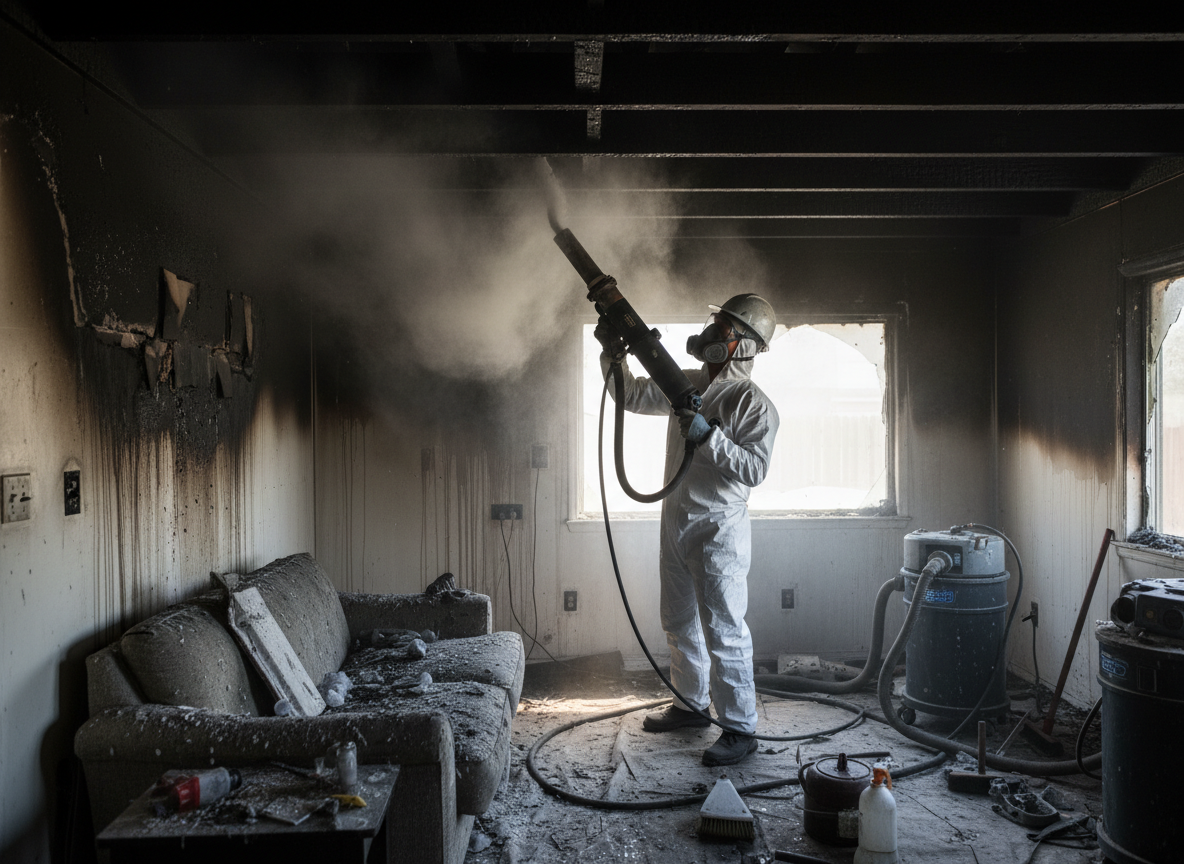
Chatsworth’s Mediterranean climate brings hot dry summers that heighten brush fire risk near Santa Susana Pass State Historic Park and Orcutt Ranch. Smoke travels easily into the older ranch-style homes common in Downtown Chatsworth and West Chatsworth, where stucco exteriors and wood framing allow particulates to settle deep into attics and HVAC systems. Restoration crews must address both visible char and invisible residue that reappears when temperatures rise again in late summer.
Los Angeles County building codes require proper containment before any cleaning begins on properties near Chatsworth Park South. Technicians test for hidden moisture from suppression efforts that can lead to secondary mold in crawl spaces common under 1960s and 1970s homes. Thermal fogging and air scrubbing are adjusted for the area’s mild winters, when closed windows trap odors longer than in neighboring Simi Valley.
Work in Canoga Park border areas often involves coordinating with local power shutoffs after fires, since older electrical panels in Chatsworth homes can be compromised by heat. Crews document every step for insurance adjusters while protecting remaining finishes that are difficult to match in mid-century construction.
Technician insight
In Chatsworth, the thing that catches most people out with fire and smoke damage restoration is how the dry summer winds push smoke into the attics of older ranch homes near Chatsworth Park South. Once it settles in the insulation and ductwork, standard cleaning misses it and the smell returns every time the heat kicks on in winter.
Attic Smoke After Nearby Fire
Smoke from a brush fire near Santa Susana Pass entered a 1972 home in West Chatsworth through attic vents. Inspection revealed residue throughout the HVAC serving the main living areas. Crews sealed the system, performed thermal fogging, and cleaned all ducts before re-testing air quality. The homeowners moved back in without recurring odors.
How it works
- 1
Emergency Assessment
Technicians arrive from the Devonshire Street location to document damage across affected rooms and test for hidden smoke in HVAC and attics.
- 2
Containment and Safety
Plastic barriers and negative air machines isolate work zones to prevent cross-contamination into unaffected areas of the home.
- 3
Cleaning and Deodorization
Specialized equipment removes residue from surfaces, followed by thermal fogging calibrated for the dry local air.
- 4
Final Verification
Air quality checks and visual inspection confirm odors are eliminated before the property is released back to the owner.
Pricing
Upfront quotes provided after inspection; cost varies with square footage affected and whether HVAC cleaning is required.