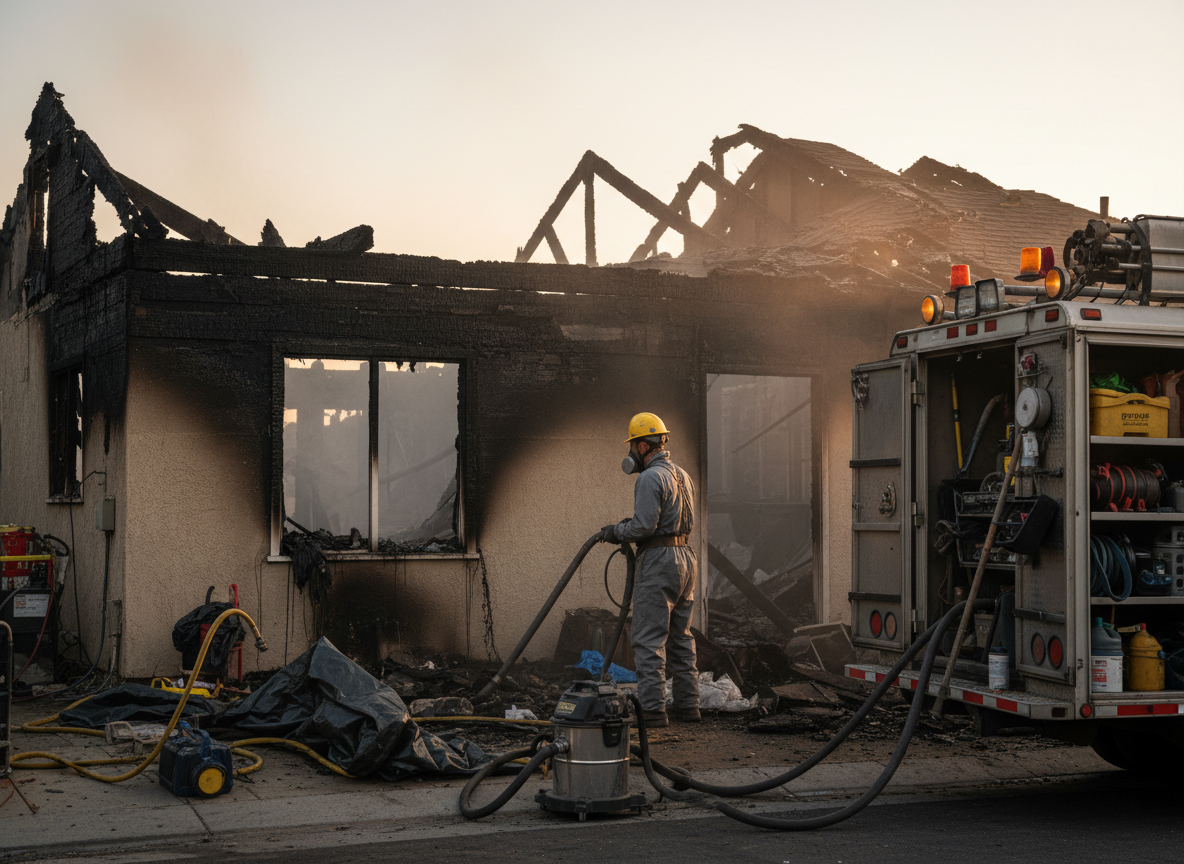
Chatsworth homes built from the 1950s through the 1980s often contain lath-and-plaster walls and older HVAC ducts that trap smoke and soot deeper than modern drywall. After a fire, crews must remove these materials room by room rather than rely on surface cleaning, especially in West Chatsworth bungalows where attic spaces connect directly to living areas. Hot dry summers accelerate corrosion on exposed metal framing once suppression water sits for more than a few days.
Santa Ana wind events can push embers from the Santa Susana Pass into Orcutt Ranch properties and Chatsworth Park South residences, creating spot fires that leave hidden char in roof sheathing. Restoration teams check for these ember trails before sealing any structure, because missed pockets ignite again when temperatures rise. Los Angeles County building codes now require updated smoke-detector placement and attic ventilation after any fire exceeding 10 percent of the roof area.
Mild winters keep humidity low, so drywall and insulation dry quickly once fans are placed, but the same low moisture lets alkaline smoke residue etch glass and metal fixtures within 48 hours. Technicians test pH levels on every surface before applying neutralizers, particularly in Downtown Chatsworth commercial buildings that share walls with neighboring structures in Northridge and Canoga Park.
Technician insight
In Chatsworth, the thing that catches most people out with fire damage restoration near me is how quickly soot travels through the shared attic spaces in 1960s tract homes near Chatsworth Park South. One kitchen fire can leave residue in bedrooms two houses away because the original construction never added fire stops. We always pull insulation and check the shared walls before anyone starts painting.
Kitchen Fire in West Chatsworth Home
A cooking fire spread through an older range hood into the attic of a 1968 ranch house off Devonshire. We found heavy soot migration through unsealed rafters into two bedrooms. Crews removed insulation, cleaned all ductwork, and dried the structure over four days before drywall replacement began. The family moved back in within three weeks.
How it works
- 1
Emergency Board-Up
Secure openings with plywood and tarps to prevent weather or trespass after the fire department clears the scene.
- 2
Soot and Smoke Removal
Use HEPA vacuums and dry-cleaning sponges on all surfaces before any water-based cleaning begins.
- 3
Structural Drying
Place air movers and dehumidifiers to remove suppression water from framing, subfloors, and insulation.
- 4
Odor Neutralization
Apply thermal fogging and ozone treatments in sealed rooms to break down embedded smoke molecules.
- 5
Rebuild and Final Walk
Replace damaged drywall, trim, and fixtures, then walk the property with the owner to confirm clearance.
Pricing
Upfront written quotes after on-site inspection; final cost depends on square footage affected, smoke penetration into older plaster, and whether contents require off-site cleaning.