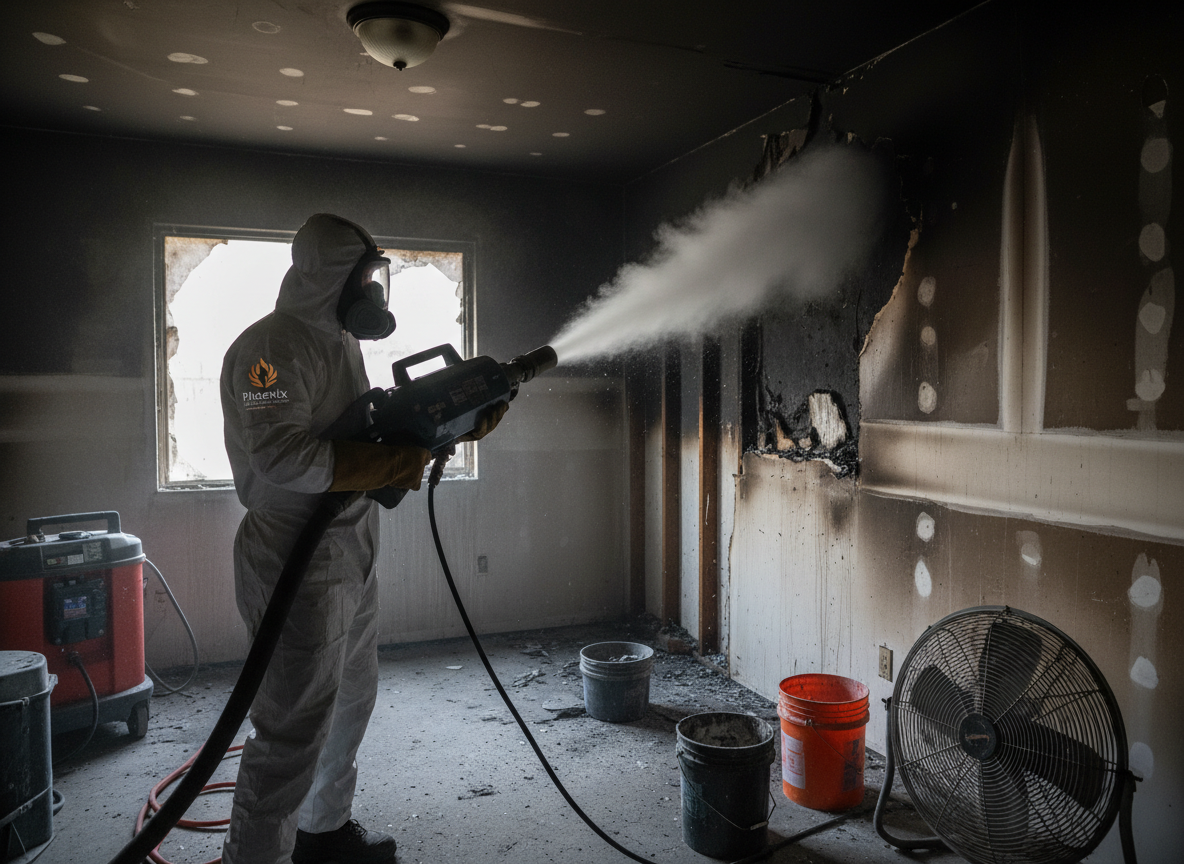
Chatsworth's Mediterranean climate brings hot dry summers that let smoke particles travel far into older single-family homes around Downtown Chatsworth and West Chatsworth. These 1960s and 1970s tract houses often have textured ceilings and unsealed HVAC returns that trap soot deep in ductwork and insulation. Remediation crews must pull registers, fog with alkaline neutralizers, and run negative air machines for days because the dry air prevents natural dissipation.
Terrain near Santa Susana Pass State Historic Park and Orcutt Ranch funnels wind-driven smoke into properties on the northern edges of Chatsworth Park. Residues from wildfires or structure fires settle differently on stucco exteriors versus interior drywall, requiring separate surface cleaning protocols. Technicians test pH levels on every wall because acidic smoke can etch paint and corrode copper wiring in homes built before modern fire codes.
Nearby Northridge and Canoga Park share similar housing stock, so cross-contamination during regional events is common. Crews isolate rooms with plastic sheeting and monitor humidity to avoid pushing smoke further into porous materials like carpet pad or attic cellulose. Failure to address hidden pockets behind kitchen cabinets or in laundry chutes leads to recurring odors months later when mild winter rains raise indoor moisture.
Technician insight
In Chatsworth the thing that catches most people out with smoke remediation is how the dry summer air lets fine soot travel through every gap in 1970s lath-and-plaster walls around Chatsworth Park. Homeowners think wiping visible surfaces is enough, but the real work is pulling attic insulation that has absorbed years of residue from Santa Susana Pass winds.
Smoke in West Chatsworth attic after neighbor fire
A structure fire two doors down sent smoke into a 1968 ranch house near Chatsworth Park South. Inspection showed soot had entered the HVAC and settled in cellulose insulation. Crews isolated the system, removed contaminated insulation, fogged the ducts, and ran air scrubbers for 72 hours until readings cleared.
How it works
- 1
Initial Assessment
Technicians inspect affected rooms, test surfaces for pH, and map smoke migration paths through HVAC and attic spaces.
- 2
Containment Setup
Plastic barriers and negative air machines isolate the work zone to prevent soot from spreading to unaffected areas of the home.
- 3
Surface Cleaning
Alkaline solutions and specialized sponges remove residues from walls, ceilings, and hard surfaces without damaging original finishes.
- 4
Odor Neutralization
Thermal fogging and hydroxyl generators treat porous materials and air spaces until no smoke smell remains.
- 5
Final Clearance
Air quality checks and visual inspection confirm the home meets restoration standards before reoccupancy.
Pricing
Cost depends on square footage affected, depth of smoke penetration into insulation and ducts, and whether multiple rooms require full isolation.