2026-10-17 ·
How Santa Ana Winds Affect Smoke and Soot Spread in Chatsworth Homes
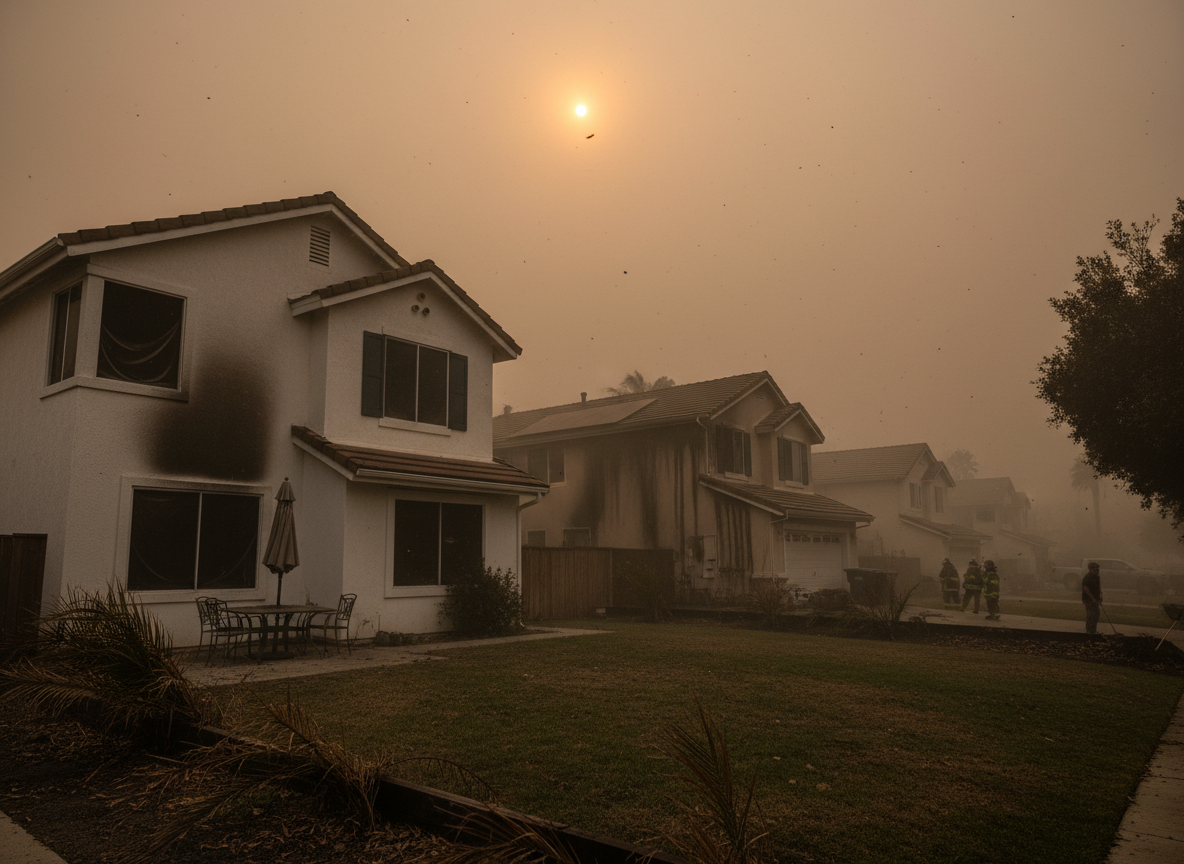
Santa Ana winds accelerate smoke and soot travel from fires in Simi Valley or the Santa Susana Pass into Chatsworth homes within a few hours, allowing fine particles to enter through roof vents, window gaps, and HVAC systems common in 1960s-era single-family houses found in West Chatsworth and near Chatsworth Park South.
Wind Patterns and Particle Travel in the Local Terrain
Santa Ana winds blow from the northeast across the San Fernando Valley, picking up speed as they descend through the Santa Susana Pass State Historic Park and into flatter neighborhoods like Downtown Chatsworth. These gusts dry out vegetation already stressed by the Mediterranean climate's hot summers, turning small embers or smoke plumes into fast-moving clouds that settle on siding, roofs, and outdoor furniture. Homes built on the slight slopes near Orcutt Ranch experience higher infiltration rates because wind funnels between structures and pushes soot under eaves. Crews routinely find residue on attic insulation and inside wall cavities after these events because older stucco and wood-frame construction leaves more pathways than newer sealed builds in nearby Northridge.
Soot Behavior on Chatsworth Housing Stock
Dry Santa Ana conditions cause soot to remain airborne longer and bond tightly to porous surfaces such as drywall and carpet in homes around Chatsworth Park. The low humidity prevents particles from clumping and falling out naturally, so they travel farther into living spaces and HVAC ducts. In West Chatsworth neighborhoods with many ranch-style homes from the 1950s, soot often travels through shared attic spaces between adjacent properties. Restoration teams must use negative air machines and HEPA filtration to capture these particles before they redistribute during cleanup, especially when winds continue for multiple days and keep pushing new layers onto surfaces.
Seasonal Timing and Secondary Effects
Santa Ana wind events peak from late fall through early winter, coinciding with the driest period after the Mediterranean climate's long summer. When a fire starts in Canoga Park or Granada Hills, the winds can carry visible smoke plumes across the 118 freeway corridor into Chatsworth within the same afternoon. This timing leaves homeowners with limited natural ventilation options because opening windows only invites more particles inside. After the winds subside, settled soot mixes with household dust and becomes harder to distinguish from normal grime, requiring targeted testing in rooms farthest from the original fire source.
Restoration Considerations After Wind-Driven Events
Technicians responding to smoke remediation calls in Chatsworth focus first on sealing HVAC intakes and then mapping soot migration paths created by the wind. Soot removal often requires chamber cleaning of contents because particles embed in fabrics and electronics during the high-velocity airflow. Property owners comparing cost variables for fire damage restoration in Chatsworth should note that wind events increase the square footage needing treatment compared with calm-weather fires. When suppression water is involved, teams also reference guidance on protecting belongings from secondary water damage after fire suppression in Chatsworth to prevent mold growth on already soot-coated materials.